Artificial intelligence in the doctor’s office: how a digital assistant helps keep the patient conversation in the room genuine
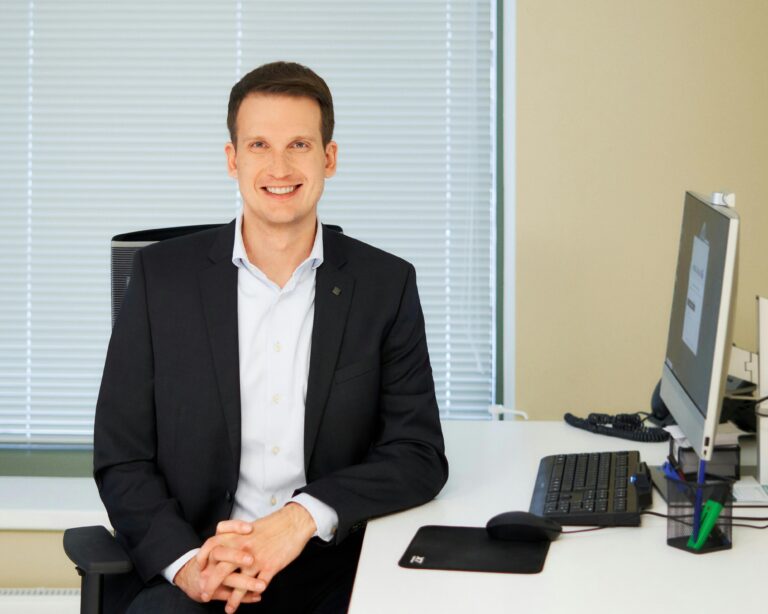
Meliva’s Chief Medical Officer Andreas Abel acknowledged that this shift is essential. “Doctors’ administrative burden has grown dramatically over recent decades. We’ve reached a point where paperwork and data entry are starting to overshadow the actual practice of medicine. AI here isn’t just an exciting gadget — it’s an essential tool that helps us keep the focus on the patient,” Abel explained.
A digital scribe that never tires
Modern medical AI works like a digital assistant capable of distinguishing, in real time, between doctor and patient dialogue, filtering out small talk and focusing only on clinically relevant information. The technology broadly falls into two types: summarising text dictated by the doctor after a visit, and listening in the background during the visit itself to fill in the clinical notes in real time.
“Imagine a situation where the doctor never has to touch the keyboard during the entire visit,” Abel described. “The AI listens to the conversation in the background and drafts a logical summary from it. Existing solutions today are already able to process complex medical terminology within seconds and turn it into a structured medical record.”
Higher-quality time and safe oversight
The greatest value, however, lies not simply in the text itself, but in how it’s organised. Developed by Meliva’s parent company Mehiläinen and continuously refined based on feedback from healthcare professionals, the solution can sift through raw conversation to extract the key components: the patient’s complaints, objective findings, and the treatment plan going forward. This reduces the risk of an important detail slipping through unnoticed during a long working day.
For the patient, this shift means a doctor who listens to and looks at them with full attention. Meliva’s Chief Medical Officer stressed that this directly affects treatment outcomes: “Patients want to feel heard. When a doctor is looking at a computer screen during a visit, that connection suffers. AI solutions let us restore direct eye contact and trust. This is technology that’s actually making medicine more human-centred again.”
Abel is clear, though, that control and responsibility always remain with the human throughout the use of the technology. “The AI drafts the notes. Final confirmation and diagnosis are always the responsibility of the healthcare professional. A person continues to check the data right to the end, ensuring its accuracy and security. The machine is an assistant here — not the decision-maker,” Meliva’s Chief Medical Officer confirmed.
Artificial intelligence in the doctor’s office: how a digital assistant helps keep the patient conversation in the room genuine
The rapid advance of medicine has brought with it a paradox: the more precise diagnostics become,...
Occupational health service providers and occupational physicians align on a shared vision in the context of the Ministry of Social Affairs’ developing strategy
On Friday, 20 March, representatives of the Estonian Association of Occupational Health Service...
Seven questions patients ask most often about dental implants
Meliva dentist and implantologist Dr Ivan Tšernõšev shares the seven questions he hears most...

Mental health and modern occupational health risks: how to build a supportive workplace
Office work is a marathon of thinking: screens, meetings, and a steady stream of deadlines keep the...

Severe period pain doesn’t have to be normal: Laura’s journey to an adenomyosis diagnosis
Laura is one of many women who spent years believing that severe period pain was simply how her...

Pollen season has begun: how to recognise and relieve allergy symptoms
Answers from allergist-immunologist Dr Kristiina...
Urologist: early erectile dysfunction symptoms are worth treating as an early warning sign for a man’s overall health
While most men feel a reflexive discomfort at the mere mention of a urologist, regularly seeing one...
Ann’s story: turbinate reduction and freedom from chronic nasal congestion
Ann had struggled for years with seasonal allergic rhinitis every spring, and at one point it...
Meliva urologist: successful modern treatment is built on new technology and a patient-centred approach
Urology has developed rapidly over the past few decades. While surgeries once meant long hospital...

Spinal surgeon Raul Laasik: timing is often decisive in treating back problems
Back pain and nerve compression are among the most common reasons patients see an orthopaedist or...