Dental veneers
Dental veneers are thin, individually made ceramic restorations used to correct aesthetic imperfections of the teeth. They help improve tooth colour, shape, small gaps, and mild misalignment, providing a natural and long-lasting result while preserving as much of the natural tooth structure as possible.

When to see a specialist
- Aesthetic dental concerns
- Tooth enamel damage
- Irregularities in tooth alignment and shape
Common symptoms
-
Broken or cracked tooth
Damage that may be too extensive to repair with a conventional filling. -
Gaps between teeth
Visible spaces between the teeth that may affect the appearance of the smile or cause food to become trapped. -
Persistent tooth discolouration
Persistent stains or a yellowish shade that cannot be removed by teeth whitening. -
Slightly misaligned teeth
Individual teeth are slightly misaligned and may be suitable for correction without extensive orthodontic treatment. -
Tooth surface defects
There are visible cracks, craze lines, or irregularities in the tooth enamel. -
Uneven tooth wear
The teeth wear unevenly due to an improper bite. -
Unevenly shaped or sized teeth
The teeth are worn, too short, or irregularly shaped, making the smile appear uneven.
How to prepare for your appointment
- Bring an ID card or another form of identification.
- Write down or think through your main questions and expectations regarding dentures.
- Information about previous dental procedures, medications you are taking, and your general health will be helpful.
- No special preparation (e.g. fasting) is required unless agreed otherwise.
What to expect during your appointment
Consultation and planning
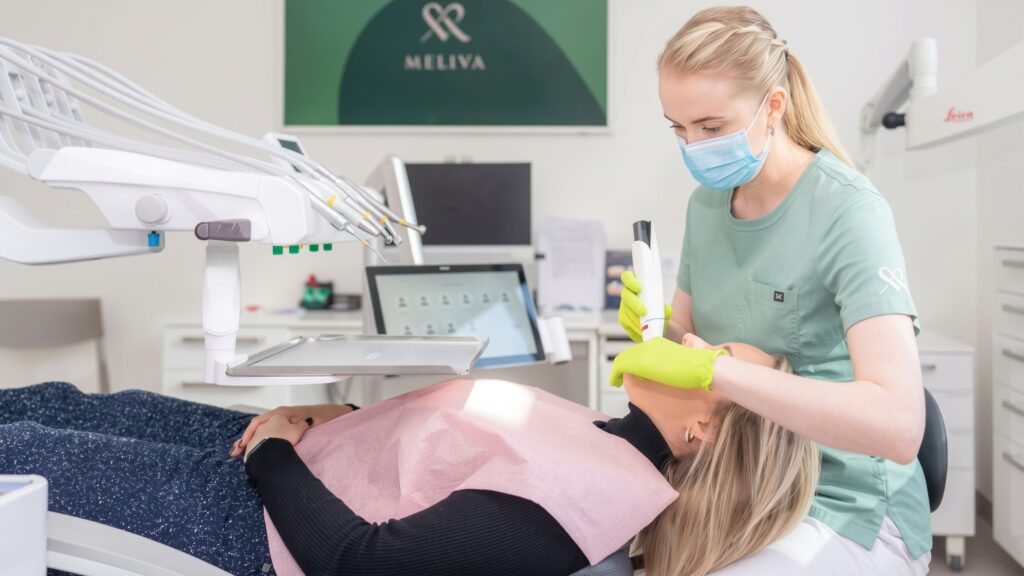
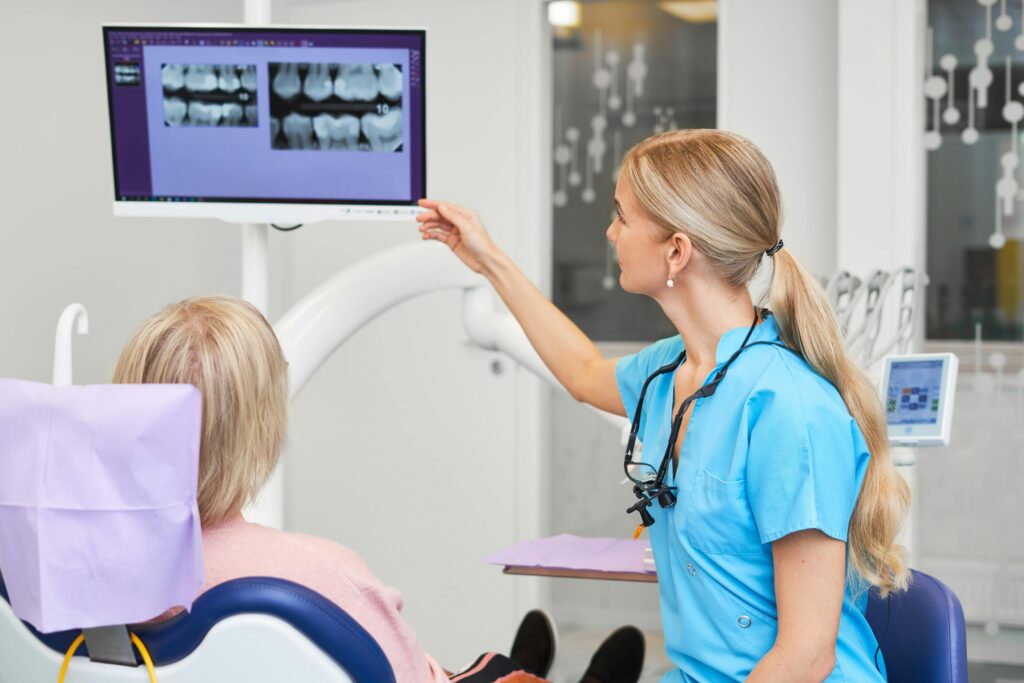
We discuss your wishes and expectations, assess the condition of your teeth, and create a personalised treatment plan.
Diagnostics, planning, and mock-up
Photos are taken and impressions are made to create diagnostic models. A dental technician designs the new tooth shape in the laboratory and produces a mock-up, which can be tried in the patient’s mouth. This allows evaluation of the expected aesthetic result before treatment begins and makes it possible to adjust the design if needed.
Tooth preparation
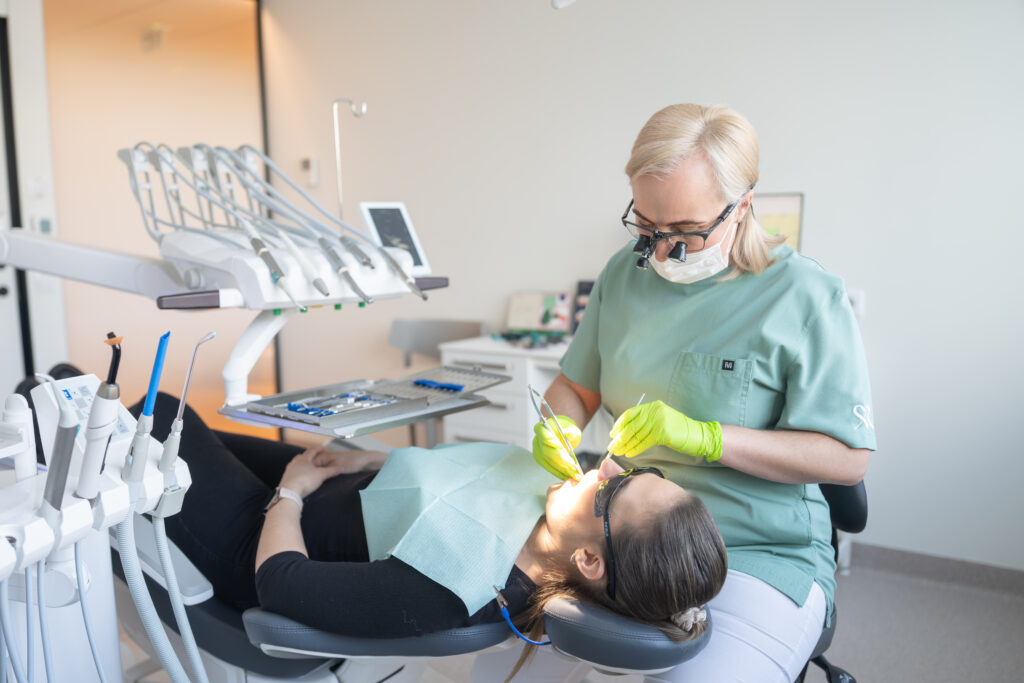
The dentist removes a minimal amount of enamel from the front surface of the tooth so that the veneers can bond properly and achieve a natural appearance.
Taking impressions
Precise impressions or digital scans of the prepared teeth are taken and sent to the dental laboratory for fabrication of the final veneers.
Temporary veneers
Temporary veneers are placed during the waiting period to protect the teeth and maintain aesthetics.
Try-in and placement of final veneers
The finished veneers are tried in, and their fit, shape, and colour are checked. They are then permanently bonded to the tooth surface using a dental adhesive.
Follow-up
A follow-up visit is scheduled to ensure proper fit, assess oral health, and provide guidance for long-term care of the veneers.
Specialists providing this service
-

-
-
-
-
-
-
-
-
-
-
-
-
-
-
-
-
-
-
-
-
-
dr Krista Leibak
Dentist, prosthodontist
Kvartal Clinic – Dental Care, Ülikooli tänava Dental Clinic
-
-
-
-
-
-
-
-
-
-
-
-
-
-
-
-
-
-
-








































On the life long mission
Payment & Appointment Info
Payment methods
Meliva Health Insurance covers this service under Dental Care coverage. Check your personal coverage limits in the ERGO app.
Referral
You can book this service as a self-paying patient without a doctor’s referral.
Clinics offering this service










Frequently Asked Questions
What are dental veneers?
Dental veneers are thin porcelain or composite restorations that are bonded to the front surface of a tooth to improve its shape, colour, and position.
Do veneers look natural?
How long do veneers last?
Porcelain veneers are very durable and can last 10–15 years or longer with proper care. Composite veneers typically have a shorter lifespan.
Is veneer placement painful?
The procedure is usually performed under local anaesthesia, making it painless. Some temporary sensitivity may occur afterwards.
Can veneers be removed?
Veneers are permanent, and removal is not recommended, as a small amount of enamel is removed during preparation.
How should veneers be cared for?
Veneers should be cared for like natural teeth: regular brushing, flossing, and dental check-ups are essential.
Can veneers break or come off?
Veneers are strong, but they can be damaged by strong impact or teeth grinding. It is important to avoid biting very hard objects.
Are veneers suitable for everyone?
No, veneers are not suitable for everyone. A dentist will assess your teeth and gum health before recommending the best option.
What is the difference between veneers and crowns?
Veneers cover only the front surface of the tooth, while crowns cover the entire tooth. Crowns are used for more extensive damage.
Do veneers affect tooth sensitivity?
In some cases, temporary sensitivity may occur after placement, but it usually disappears within a few weeks.