CELON
Turbinate reduction, also known as CELON, is a surgical procedure that removes or reduces excessively grown mucosal and bone tissue masses located inside the nose to improve breathing.
Text reviewed by specialist:

Ear, nose, and throat specialist, Somnologist
Published
Text updated
When to see a specialist
- Persistent nasal congestion
- Impaired nasal breathing
- No or minimal effect from medications (topical hormones)
- Fatigue and/or sleep disturbances due to nasal congestion
Common symptoms
-
Constant or intermittent nasal congestion
When lying down nasal congestion becomes more prominent. When lying on your side, the lower nostril closes. -
Dry mouth and throat in the mornings
Indicates mouth breathing and insufficient nasal breathing. -
Frequent need to use nasal sprays (decongestants)
Continuous use of decongestants can lead to dependence. -
Nasal congestion during physical exertion
Physical exertion can cause turbinate enlargement and nasal congestion in some people.
How to prepare for your appointment
- Bring your ID card or other identification document to the clinic.
- Before planning the surgery, an ENT consultation is necessary to discuss your expectations, goals, and the course of treatment.
- The patient must be healthy for the procedure. In case of acute illness, please inform the clinic, and we will find a new suitable time.
What to expect during your appointment
Anesthesia
During the procedure, the nasal mucous membranes are first anesthetized with tampons, which are placed in the nose before the procedure with a local anesthetic. At the beginning of the procedure, an anesthetic is also injected under the nasal mucous membrane.
Procedure
The nasal turbinate is treated with a special CELON electrode, which heats the tissues.
Post-procedure monitoring
After the procedure, you will be monitored in the clinic for about twenty minutes, longer if necessary.
Specialists providing this service
-
 dr Anne-Ly Miggur
Ear, nose, and throat specialist
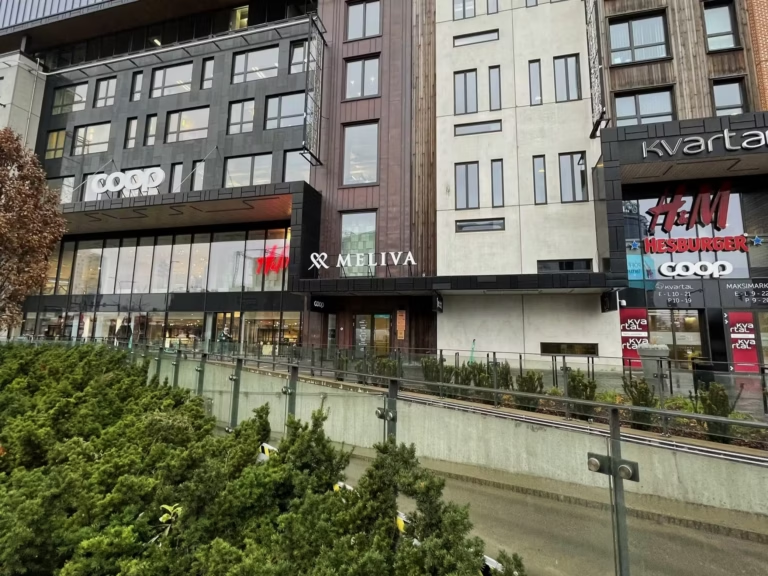
Kvartal Clinic – Specialist Medical Care and Occupational Health
-
-
dr Kristel Kivisild
Ear, nose, and throat specialist
Kvartal Clinic – Specialist Medical Care and Occupational Health
-
dr Marina Tšerkassova
Ear, nose, and throat specialist
Jalgpalli clinic, Ülemiste Health Centre, Rävala Clinic – Specialist Medical Care and Occupational Health
-
dr Risto Vaikjärv
Ear, nose, and throat specialist, Somnologist
Rävala Clinic – Specialist Medical Care and Occupational Health
-
dr Sirje Teppo
Ear, nose, and throat specialist
Kvartal Clinic – Specialist Medical Care and Occupational Health
-






Payment & Appointment Info
Prices
Tallinn
| Service | Price |
|---|---|
| CELON radiofrequency procedure The need for and suitability of the procedure will be assessed during a prior consultation with a specialist in Meliva, and the decision to proceed will be made jointly with the specialist. | 350 € |
Everywhere else in Estonia
| Service | Price |
|---|---|
| CELON radiofrequency procedure The need for and suitability of the procedure will be assessed during a prior consultation with a specialist in Meliva, and the decision to proceed will be made jointly with the specialist. | 350 € |
Payment methods
The service at Tartu Kvartal clinic is funded by the Health Insurance Fund based on a referral. To book an appointment funded by the Health Insurance Fund, please call +372 605 1500 or write to klienditugi@meliva.ee.
Referral
An appointment with a specialist is required first to assess whether the service is suitable or necessary.
Clinics offering this service



Frequently Asked Questions
How long does recovery last?
In the first few days, severe nasal congestion and nasal discharge occur. Symptoms will begin to decrease within 1-2 weeks, and the final result will develop after 3-4 weeks.
How permanent is the result?
The result can be long-lasting but not always lifelong. If the turbinates become large again, the procedure can be repeated.
Does it affect the sense of smell?
Temporary loss of smell is possible due to swelling, but permanent loss of smell does not occur.
Does it change the appearance of the nose?
No, the turbinates are located inside the nose, so it does not change the external appearance.