Dr Gert Mikkal: Radiology is increasingly establishing itself as a clinical specialty
Radiology is one of the fastest-evolving fields in medicine, playing a key role in both diagnosing disease and guiding treatment. Diagnostic images give doctors a thorough picture of a patient's condition, helping them make accurate diagnoses and choose the right treatment approach. Meliva's lead radiologist, Dr Gert Mikkal, discusses the challenges of managing radiology, the diagnostic options available at Meliva, and MRI scans in particular.
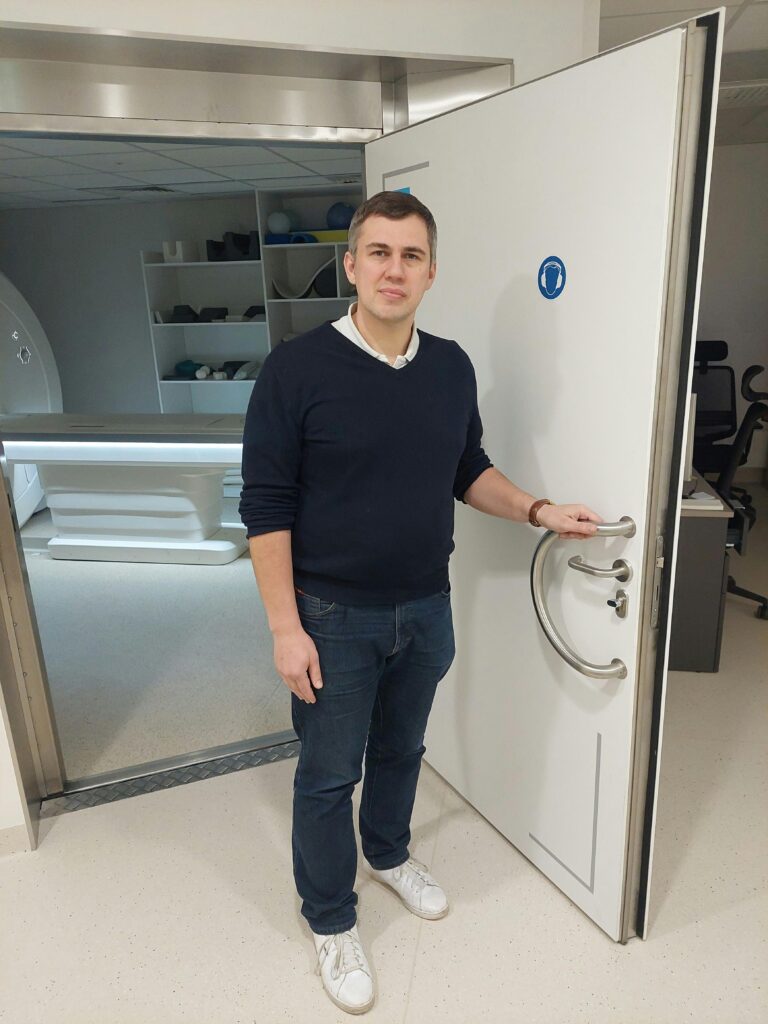
Good collaboration and communication are key
As medicine continues to evolve, radiology today is no longer limited to simply producing and interpreting images. “Radiology is increasingly becoming a clinical specialty, where our job isn’t just describing an image, but also assessing the patient’s condition based on it, and, where needed, recommending and carrying out further tests or treatment procedures,” Dr Mikkal explains.
Because radiology is closely linked to other clinical specialties, smooth collaboration matters a great deal. “A radiologist can’t always give a precise, well-informed assessment if the referral doesn’t include the necessary clinical information,” Dr Mikkal notes. “When referrals aren’t filled out correctly, we can’t make full use of the potential of modern radiology, which can ultimately have a negative impact on the patient’s care pathway,” he adds.
Diagnostic options at Meliva
Meliva offers modern diagnostic options, including X-ray imaging for examining bones, ultrasound for assessing soft tissue, and magnetic resonance imaging (MRI), suited to examining bones, joints, the brain and spinal cord, and, with some exceptions, the abdominal and pelvic organs. “Since we have ultrasound available, we can also perform biopsies where needed, as well as certain treatment procedures, such as intra-articular injections,” Dr Mikkal notes.
An MRI scan needs to be properly planned
An MRI machine allows very precise examination of different areas of the body, offering valuable insight into health concerns. It’s important, though, that the scan is properly planned — meaning the referral and the working diagnosis need to be clear and specific. “Scans take a long time, and depending on the question being asked, they can be planned in different ways,” the doctor explains. Without sufficient clinical information and the right questions, MRI findings can end up non-specific. “For the patient to get a scan that’s actually worth their time and money — one that hopefully explains their symptoms or rules out the most important unwanted diagnoses — a well-prepared referral is absolutely essential,” Dr Mikkal points out.
MRI scans don’t use ionising radiation, so according to current scientific research, they’re safe for patients. That said, it’s worth keeping in mind that a scan often takes 30-60 minutes, during which the patient needs to be able to lie completely still inside a narrow tube. Even so, doctors provide a panic button that the patient can press to stop the scan if needed. “This examination really isn’t suitable for people who suffer from claustrophobia,” Dr Mikkal notes. In such cases, alternative diagnostic methods should be considered.