Meliva orthopaedist Dr Mart Pais: everyday work with wounded soldiers continues in Ukrainian hospitals
In early October, Meliva orthopaedist Dr Mart Pais spent a week working at the Volyn Regional Clinical Hospital in Lutsk, in north-western Ukraine. The hospital treats soldiers evacuated from the front line who have reached a stable enough condition to continue treatment further from the fighting.
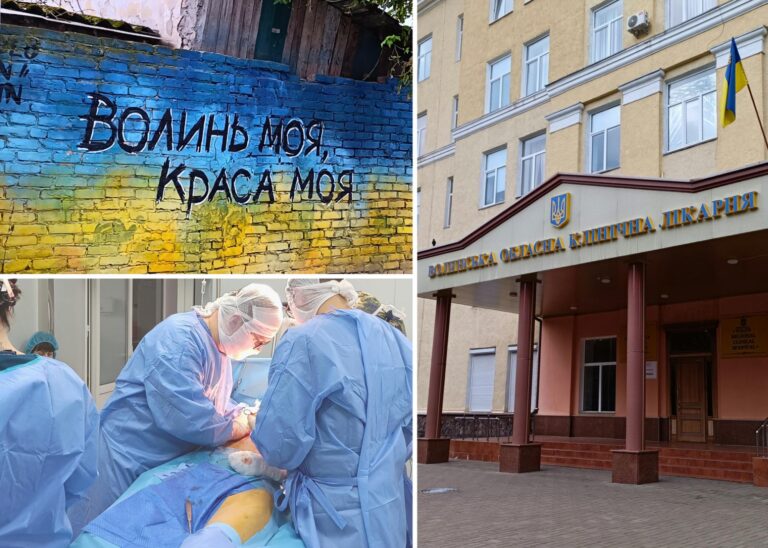
The mission came about through Finnish colleagues who had taken part in training front-line medics and were looking for trauma specialists willing to go and help in Ukraine.
“Trauma and infection surgery are subjects close to my heart,” says Dr Pais. “War injuries fall exactly into those areas — and this was a chance to help where help is genuinely needed.”
“Every patient was a young man in his twenties”
Lutsk lies in a relatively calm part of the country, but the reality of war is felt there every day.
“During our time there, we had air raid alerts two nights in a row,” he recalls. “When 30-40 fighter jets take off from the Russian side, an air raid alert goes out across the whole country, because no one knows where the missiles will land.”
The hospital’s day-to-day work, though, followed a steady rhythm.
“The ward had around 25-30 beds, and every morning on rounds we’d see that all the patients were young men in their twenties,” Dr Pais says quietly. “It wasn’t exactly unexpected, but it was still a hard thing to witness.”
Endless work treating those wounded at the front
Surgeons at the Volyn regional hospital deal with complex fractures, burns, and infections. Equipment is limited, and donated devices are often relied on.
“One of the basic tools — the suction device used to irrigate wounds — was a piece of equipment donated by Sweden, over 20 years old, still in use in the operating room,” Dr Pais describes. “The cord barely held together, and you just had to hope it wouldn’t fail mid-procedure.”
He recalls one patient who suffered a severe leg injury in a drone strike.
“He needed 16 centimetres of his shinbone removed. The bone was temporarily replaced with antibiotic-infused cement, so new bone could later be grown in its place. It’s a long and complicated course of treatment,” the doctor says.
The biggest concerns, though, relate to the availability of antibiotics and multidrug-resistant bacteria, which make treatment even more difficult.
“What happens there can’t be conveyed through pictures”
Dr Pais says no photo or news report can truly convey what he experienced firsthand in Ukraine. “No matter how many pictures we see or stories we read, it doesn’t convey what life there is actually like — how people are really coping,” he says. “It’s only through direct contact that you understand what war actually means.”
He also recalls a department head who hadn’t taken a single day off in four years. “That shows just how much strain people there are working under,” he adds.
Gratitude and a call to action
According to Dr Pais, the gratitude he encountered from Ukrainians was sincere and warm. “Every time someone heard I’d come from Estonia to help, they’d simply say: thank you for being here.”
He plans to return to Ukraine at the start of the new year. “This work won’t be finished there any time soon. Even after the war ends, rehabilitation and surgeries will continue for years,” he says.
What he experienced in Lutsk left him with a deep conviction that support for Ukraine must continue.
“In medicine there, there’s a shortage of almost everything — from antibiotics to simple supplies, like moisturising creams for skin-graft patients,” Dr Pais says. “If anyone wants to help, they can do so directly — the contacts and channels for cooperation already exist.”
Would you like to support the Volyn regional hospital?
Dr Pais can help arrange direct contact with the hospital in Lutsk. For more information, reach out through Meliva’s social media channels or email mart.pais@meliva.ee.