Why home care and professional deep cleaning are inseparable
There's a common myth that professional teeth cleaning damages tooth enamel, or that it's only needed once a problem has already appeared. This is a dangerous misconception — one that can lead to serious health problems. Veronika Tšepurnaja, oral hygiene assistant at Meliva's Rävala clinic, explains where the line falls between what home care can achieve and where professional intervention becomes necessary.

Brushing at home: effective control over soft plaque
Daily toothbrushing is the first line of defence for oral health. Its main purpose is to remove food debris and fresh soft plaque from the visible surfaces of the teeth. Regular brushing with the right technique keeps the overall bacterial load in the mouth under control, which is critical for preventing cavities and gum inflammation.
But a toothbrush has physical limits. It’s designed to clean the crown of the tooth — the part above the gumline. Even the best toothbrush can’t reach areas where minerals in saliva have already hardened plaque into tartar, or where bacterial colonies have formed deep beneath the gumline.
“But a toothbrush has physical limits. It’s designed to clean the crown of the tooth — the part above the gumline. Even the best toothbrush can’t reach areas where minerals in saliva have already hardened plaque into tartar, or where bacterial colonies have formed deep beneath the gumline,” Tšepurnaja explained.
The invisible threat: what happens in gum pockets?
The junction between tooth and gum is a critical area for oral health. With healthy gums, the grooves between gum and tooth — the gum pockets — stay shallow and accessible. But when soft plaque along the gumline isn’t cleaned away, it mineralises into hard tartar that home care simply can’t remove.
This hardened buildup starts pushing the gum away from the tooth, creating deeper pockets. This forms a closed, low-oxygen environment where specific bacteria begin to thrive. That’s exactly where chronic inflammation takes hold — often progressing for a long time without pain, while steadily destroying the bone that supports the teeth. The result is gingivitis, and its more advanced form, periodontitis — the leading cause of tooth loss in adults.
Professional intervention: deep cleaning beneath the gumline
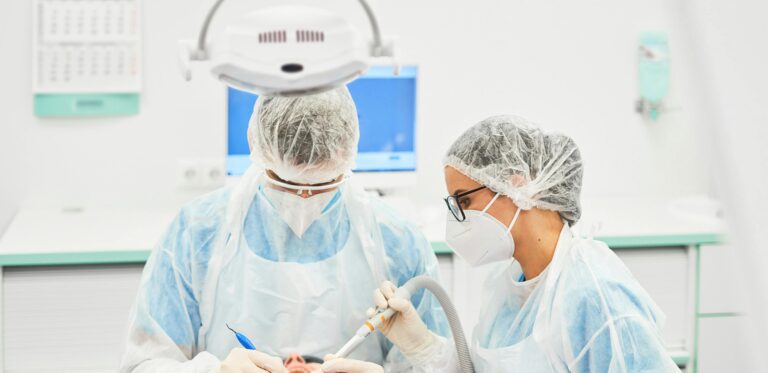
Professional oral hygiene treatment isn’t simply a cosmetic cleaning of the teeth — it’s a medical procedure to remove the bacterial colonies that form beneath the gumline. An oral hygiene specialist uses technology specifically designed to reach the areas a toothbrush can’t.
“These tools are designed to be aggressive against plaque and tartar, while remaining extremely gentle on tooth enamel. Fears about enamel wear are therefore unfounded with today’s technology,” said the Meliva oral hygiene specialist.
The procedure removes the bacterial biofilm and inflammatory triggers from exactly where they’re most dangerous, allowing the gum to reattach tightly around the tooth once again.
Why is regular check-up essential for dental health?
Professional cleaning is an integral part of preventive medicine. It doesn’t just ease symptoms — it prevents serious conditions from developing in the first place. Regular visits matter for several reasons:
- Removing bacteria from deep pockets helps prevent jawbone atrophy.
- Untreated gum inflammation is linked to a range of broader health issues, including cardiovascular disease.
- Bad breath is often mainly caused by bacteria accumulating and breaking down in gum pockets.
- A specialist can spot early problems (such as micro-cracks or creeping cavities) long before the patient would notice them on their own.
Your toothbrush is your best ally for daily care, but professional cleaning is what guarantees the health of your mouth even in the areas that stay out of sight in the mirror.