Artificial intelligence in the doctor’s office: how a digital assistant helps keep the patient conversation in the room genuine
The rapid advance of medicine has brought with it a paradox: the more precise diagnostics become, the more time doctors spend looking at a screen and typing. Documentation requirements — essential for ensuring quality care — have quietly crept in between doctor and patient. Yet technology itself is now offering a solution, as AI-based transcription tools promise to free doctors from their computers and bring the focus back to the person in front of them.
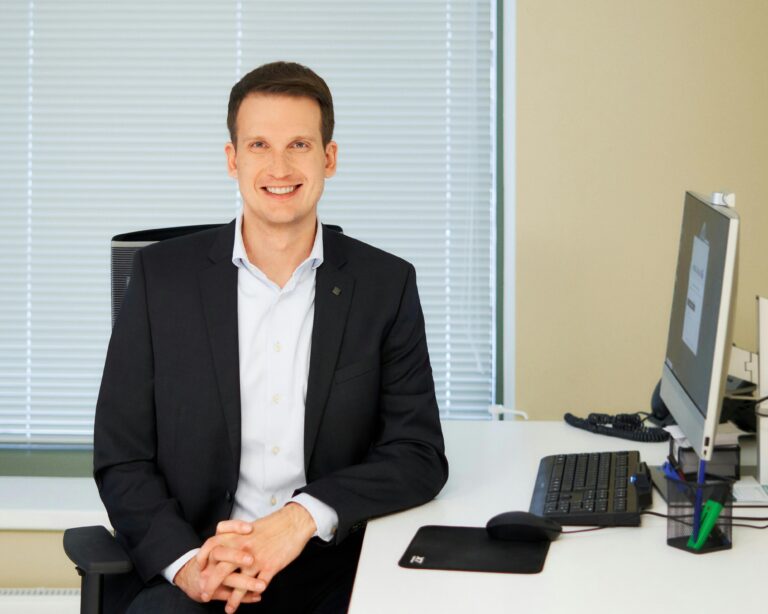
Meliva’s Chief Medical Officer Andreas Abel acknowledged that this shift is essential. “Doctors’ administrative burden has grown dramatically over recent decades. We’ve reached a point where paperwork and data entry are starting to overshadow the actual practice of medicine. AI here isn’t just an exciting gadget — it’s an essential tool that helps us keep the focus on the patient,” Abel explained.
A digital scribe that never tires
Modern medical AI works like a digital assistant capable of distinguishing, in real time, between doctor and patient dialogue, filtering out small talk and focusing only on clinically relevant information. The technology broadly falls into two types: summarising text dictated by the doctor after a visit, and listening in the background during the visit itself to fill in the clinical notes in real time.
“Imagine a situation where the doctor never has to touch the keyboard during the entire visit,” Abel described. “The AI listens to the conversation in the background and drafts a logical summary from it. Existing solutions today are already able to process complex medical terminology within seconds and turn it into a structured medical record.”
Higher-quality time and safe oversight
The greatest value, however, lies not simply in the text itself, but in how it’s organised. Developed by Meliva’s parent company Mehiläinen and continuously refined based on feedback from healthcare professionals, the solution can sift through raw conversation to extract the key components: the patient’s complaints, objective findings, and the treatment plan going forward. This reduces the risk of an important detail slipping through unnoticed during a long working day.
For the patient, this shift means a doctor who listens to and looks at them with full attention. Meliva’s Chief Medical Officer stressed that this directly affects treatment outcomes: “Patients want to feel heard. When a doctor is looking at a computer screen during a visit, that connection suffers. AI solutions let us restore direct eye contact and trust. This is technology that’s actually making medicine more human-centred again.”
Abel is clear, though, that control and responsibility always remain with the human throughout the use of the technology. “The AI drafts the notes. Final confirmation and diagnosis are always the responsibility of the healthcare professional. A person continues to check the data right to the end, ensuring its accuracy and security. The machine is an assistant here — not the decision-maker,” Meliva’s Chief Medical Officer confirmed.