Photodiagnostics
A photographic status is part of modern dentistry, where the condition of the teeth, mouth, and face is documented before, during, and after treatment. The photos help plan treatment, monitor changes, and evaluate aesthetics and results, especially in orthodontics and aesthetic dentistry.
Health concerns for which diagnostic testing may be necessary
A dentist may request a photographic status during treatment in the following cases:
- Accurate diagnostics: Early and precise detection of caries, gum disease, and other oral health problems.
- Treatment planning: Detailed planning of complex aesthetic and functional cases.
- Monitoring treatment results: Documenting and comparing changes during and after treatment.
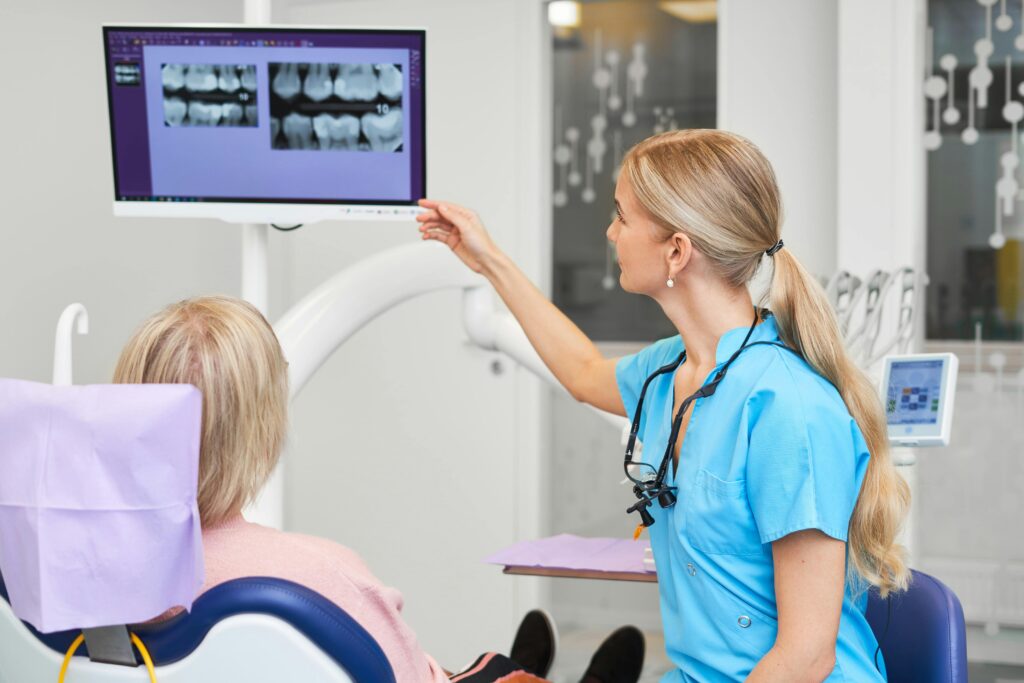
- Patient education: Explaining the oral condition to the patient using visual materials.
- Aesthetic treatment planning: Smile design and visualization of expected results.
- Collaboration with other specialists: Sharing detailed images with other dentists or laboratories.
- Medical documentation: Providing an accurate and objective record of the patient’s oral condition.
What is the procedure used for?
Please contact a dentist with your complaint, and they will refer you for the procedure if necessary:
- Aesthetics: for example, for treatment planning and documentation of treatment.
- Implantology: for example, for planning complex treatment cases.
- Orthodontics: for example, for treatment planning and monitoring treatment results.
How to prepare for your appointment
No special preparation is required for the procedure. If possible, brush your teeth or rinse your mouth before the photographs are taken. It is also recommended to come without makeup (especially lip makeup) and to wear clothing without a hood or a high collar.
What to expect during your appointment
Consultation and assessment of needs
Your wishes are discussed and the procedure is explained.
Intraoral photography
Detailed images are taken inside the mouth to document the condition of the teeth and gums. Cheek retractors and lip holders are used to keep the lips and cheeks away. For photographing the chewing surfaces of the upper and lower arches, a warm mirror is placed in the mouth.
Extraoral photography
Portrait photos are taken at rest and while smiling from different angles. The exact shots are determined during the dental visit.
Image analysis and diagnostics
The dentist analyses the photos, consults with the laboratory if needed, and prepares a treatment plan.
Discussion of results with the patient
Findings are explained and suitable treatment options are offered.
Documentation for future comparison
The images are stored in the patient’s medical record.
Payment & Appointment Info
Prices
Tallinn
| Service | Price |
|---|---|
| Visit fee Added to the appointment fee. | 20 € |
| Specialist consultation Assessment of dental and oral health, radiographs | 70 € A visit fee is added to the price. |
Tartu, Kuressaare
| Service | Price |
|---|---|
| Visit fee Added to the appointment fee. | 13 € |
| Specialist consultation Assessment of dental and oral health, radiographs | 70 € A visit fee is added to the price. |
Pärnu, Kärdla
| Service | Price |
|---|---|
| Visit fee Added to the appointment fee. | 13 € |
| Specialist consultation Assessment of dental and oral health, radiographs | 65 € A visit fee is added to the price. |
Payment methods
With a doctor’s referral, Meliva Health Insurance covers this service under Dental Care coverage. Check your personal coverage limits in the ERGO app.
For insured adults, the dental care benefit provided by the Tervisekassa (Health Insurance Fund) is deducted from the treatment cost at the clinic.
The Tervisekassa (Health Insurance Fund) covers the dental care for insured patients under 19 years of age.
A visit fee may be added to the cost of treatment. Familiarize yourself with Meliva’s policy on charging visit fees.
Referral
A doctor’s referral is required to book this service.
On the life long mission
Frequently Asked Questions
What is photodiagnostics in dentistry?
Photodiagnostics is a method that uses special cameras and lighting to capture detailed images of the condition of the teeth, gums, and oral cavity. If necessary, portrait photos are also taken.
Why is photodiagnostics important?
It provides the dentist and patient with an accurate visual overview of oral health, helping to diagnose conditions, plan treatment, and monitor results.
Is the procedure painful?
No, the procedure is not painful. Some discomfort may occur during intraoral photography (e.g. small mouth opening or gag reflex), and some patients may feel mild discomfort during portrait photography due to bright flash light.
How long does photodiagnostics take?
The procedure is quick and takes about 10–15 minutes.
What is photodiagnostics used for?
It is used for planning aesthetic dentistry, orthodontics, implants, and other complex dental treatments, as well as for monitoring treatment progress and documenting results.
Does photodiagnostics replace X-rays?
No, photodiagnostics is a complementary diagnostic method. It provides a visual overview but does not replace X-rays for assessing bone structures.
Is photodiagnostics safe?
Yes, photodiagnostics is completely safe.
Can I get my photos?
Yes, it is possible to receive the photos taken during treatment.
Is photodiagnostics expensive?
The cost depends on the clinic and the scope of the service. A more accurate price can be provided during a dental consultation.
Is photodiagnostics suitable for children?
Yes, it is also suitable for children to monitor dental development and plan orthodontic treatment.