Pediatric orthodontics
Pediatric orthodontics focuses on monitoring the development of teeth and bite alignment and, if necessary, early intervention to align teeth and correct malocclusion. Timely assessment helps support jaw growth and creates the conditions for a stable and functional bite.

When to see a specialist
- Crooked or irregular teeth: the position of primary or permanent teeth needs correction.
- Malocclusions: overbite, underbite, crossbite, or other bite problems that may affect jaw development.
- Gaps between teeth: excessive spacing between the teeth.
- Premature loss of primary teeth: may affect the proper eruption of permanent teeth.
- Jaw discrepancies: the jaws are not developing in a balanced way.
- Habits that affect the bite: such as thumb sucking or tongue thrusting against the teeth.
Common symptoms
-
Dental cavity
A dental cavity, or dental caries, is damage to the hard tissues of the tooth caused by bacteria and acids. It may lead to sensitivity, pain, and toot -
Difficulty chewing
Chewing food is uncomfortable or difficult. -
Dissatisfaction with the appearance of your smile
The condition of your teeth affects the appearance of your smile and your self-confidence. -
Gaps between teeth
Visible spaces between the teeth that may affect the appearance of the smile or cause food to become trapped. -
Misaligned teeth or bite problems
The teeth are crooked, overlapping, or do not fit together properly. -
Tooth sensitivity
Tooth sensitivity is an uncomfortable or painful sensation in the teeth when consuming hot, cold, sweet, or acidic foods and drinks. -
Toothache
Toothache is a symptom that manifests as a sharp or throbbing pain in one or more teeth and may worsen when chewing or with temperature changes. -
Uneven tooth wear
The teeth wear unevenly due to an improper bite.
How to prepare for your appointment
- Bring your child’s ID card or another valid identification document.
- Please write down or think through your main questions and expectations for the consultation.
- Information about previous dental treatments, current medications, and your child’s general health is also helpful.
What to expect during your appointment
Consultation and diagnostics
We discuss your wishes, assess your child’s teeth and jaw development, and if necessary take X-rays, models, and photographs.
Treatment planning
We create an individual treatment plan, including suitable treatment methods and a timeline.
Start of treatment
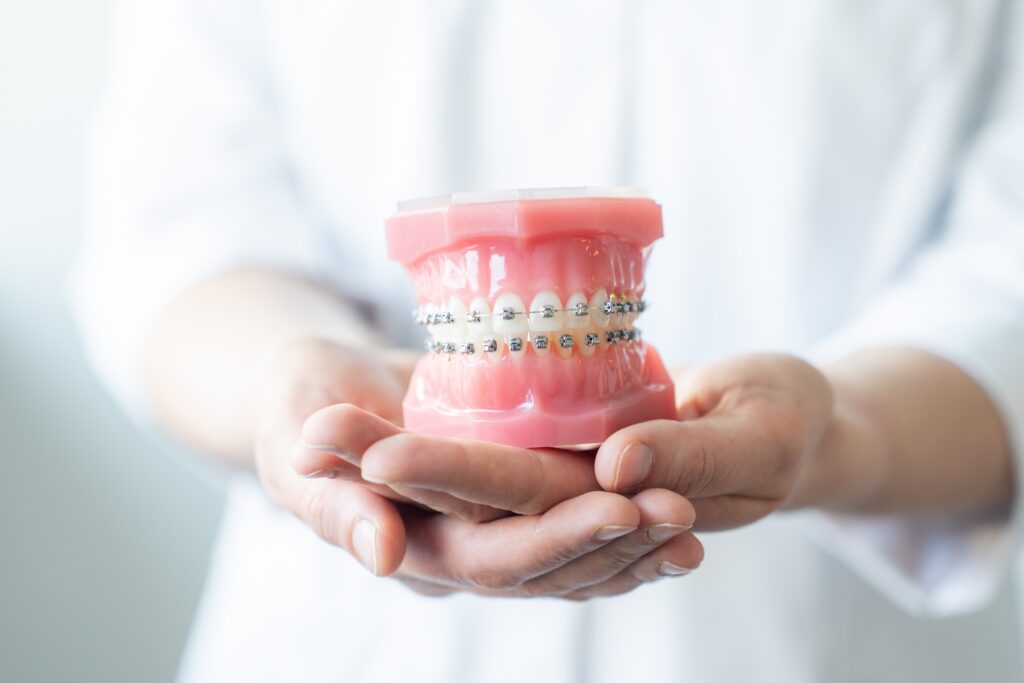
The selected orthodontic appliance is fitted (e.g., braces or clear aligners).
Regular check-ups
During treatment, regular visits are scheduled to activate, adjust, and monitor the appliance and track progress.
End of treatment and retention
After active treatment, retainers are made and fitted (e.g., fixed wire retainer or removable Essix retainer) to maintain the achieved result.
Follow-up visits
Follow-up appointments are scheduled to monitor the retainer and tooth stability.
Specialists providing this service









On the life long mission
Payment & Appointment Info
Payment methods
This service is not covered by Meliva Health Insurance. Check your personal coverage limits in the ERGO app.
The Tervisekassa (Health Insurance Fund) compensates for orthodontic treatment of insured patients under 19 years of age only in specified cases.
A visit fee may be added to the cost of treatment. Familiarize yourself with Meliva’s policy on charging visit fees.
Referral
To receive a service funded by the Tervisekassa (Health Insurance Fund), a treating physician’s referral is required.
Clinics offering this service
-
Open

-
Open

-
Open

-
Open

Frequently Asked Questions
What is pediatric orthodontic treatment?
Pediatric rthodontic treatment is a branch of dentistry that focuses on correcting the development and position of children’s teeth and jaws during growth.
How long does orthodontic treatment take?
Treatment duration is individual and depends on the complexity of the problem, the chosen method, and the child’s age. It can last from a few months to several years.
Is orthodontic treatment painful?
At the beginning of treatment and after adjustments, mild discomfort, tenderness, or pain may occur, but it usually subsides within a few days. Over-the-counter pain relief can be used if needed.
What is the difference between braces and aligners?
Braces are fixed metal or ceramic brackets attached to the teeth, while aligners are clear removable trays that gradually move the teeth.
How should oral hygiene be maintained during orthodontic treatment?
Careful oral hygiene is especially important during orthodontic treatment. The orthodontist, dental assistant, dentist, or dental hygienist will provide specific instructions for cleaning the appliance.
Is pediatric orthodontic treatment expensive?
The cost depends on the complexity of the case, the chosen treatment method, and the duration of treatment. A detailed estimate is provided during the orthodontic consultation or treatment planning stage.
What is a retainer?
A retainer (e.g. a fixed wire retainer) is placed after active orthodontic treatment to maintain the achieved result and prevent teeth from shifting back.
Do I need to wear a fixed retainer for the rest of my life?
In most cases, long-term or lifelong wear of a fixed retainer is recommended because teeth can naturally shift throughout life. A retainer helps maintain the results of orthodontic treatment and reduces the risk of teeth moving back to their original positions. The condition of the retainer should be checked regularly by a dentist or orthodontist and repaired or replaced if necessary.
Does orthodontic treatment only improve appearance?
No, orthodontic treatment can also improve chewing function, speech clarity, and oral hygiene, helping to prevent future dental problems.
Do I need other dental treatments before orthodontics?
Yes, all teeth must be treated and gum disease must be under control before starting orthodontic treatment.